01
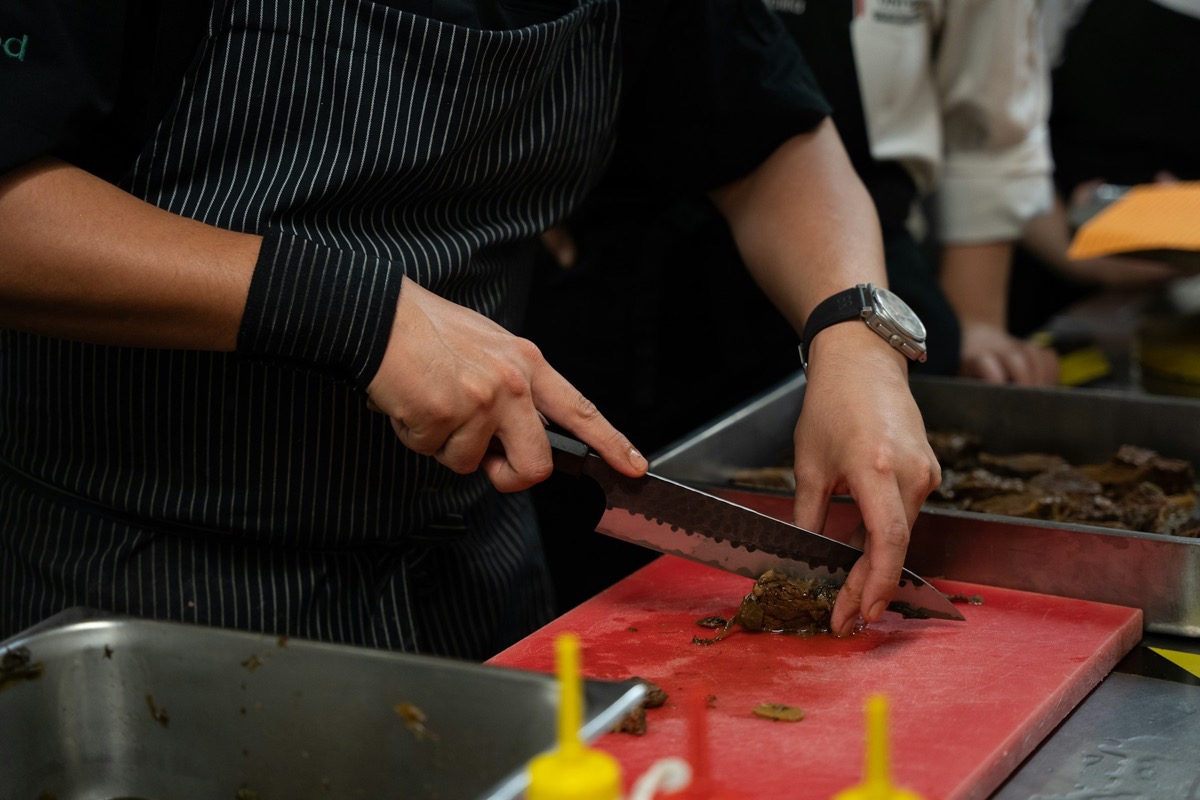
Kitchen work
Commercial kitchens & food service
Cutting, portioning, dish handling and work-surface cleanup.
TOOL–OBJECT INTERACTIONEgocentric human demonstrations for physical AI. Scope task coverage, action taxonomy and acceptance criteria before collection.
Video. Temporal labels. Traceable provenance.
Tell us the tasks, capture requirements and labels your model needs.
For teams building vision-language-action (VLA) models and physical AI. Start with the tasks, then choose the capture and supervision your pipeline needs.
Collection scenarios to scope in Indonesia. Reference photos illustrate the work; they are not Handtrained recordings or confirmed collection sites.
Commercial kitchens & food service
Cutting, portioning, dish handling and work-surface cleanup.
TOOL–OBJECT INTERACTION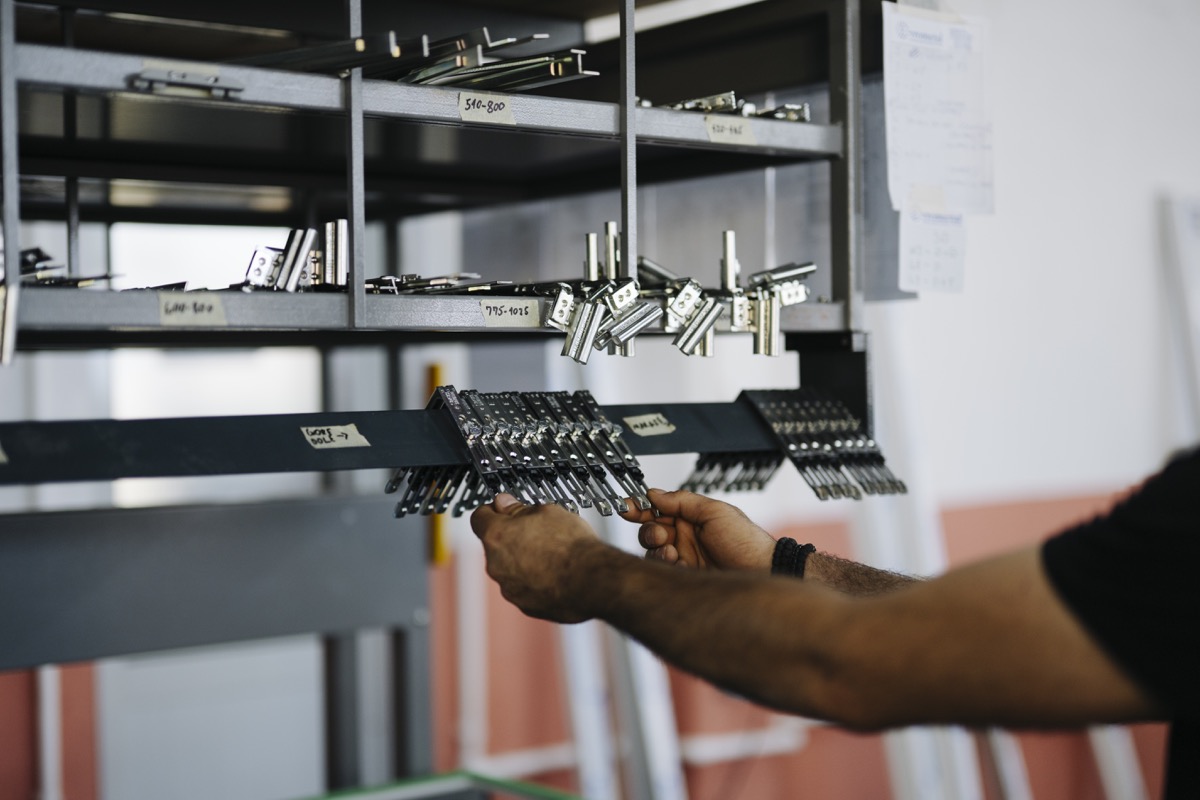
Stockrooms, logistics & workstations
Selecting parts, sorting objects, kitting and packing.
OBJECT VARIATION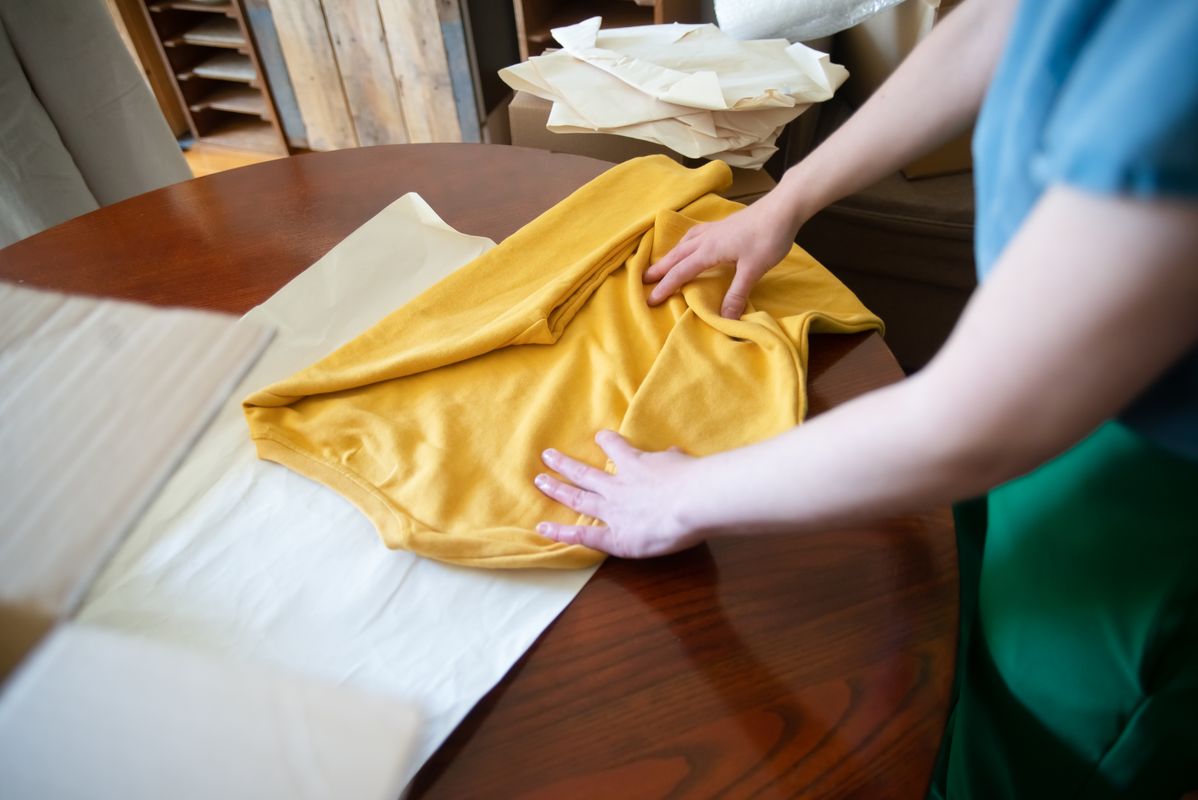
Laundry, linen & housekeeping workflows
Smoothing, folding, stacking and packing fabric.
DEFORMABLE OBJECTS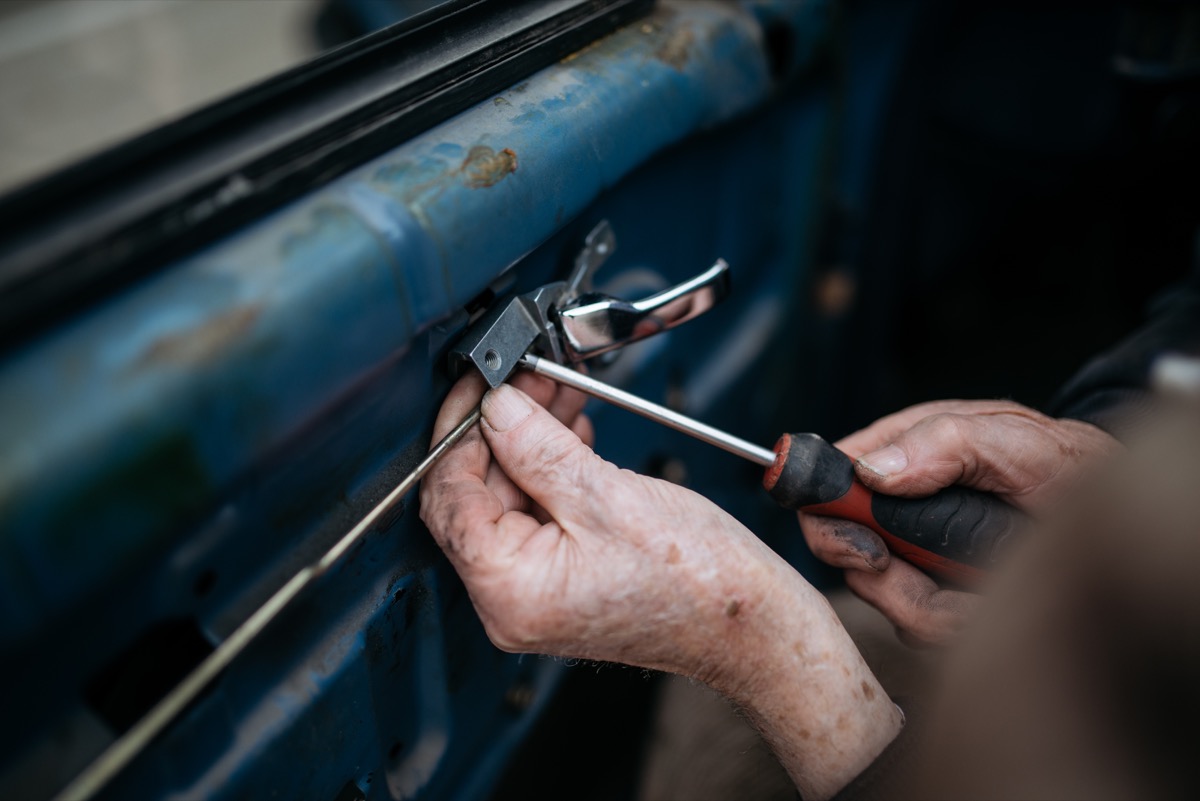
Workshops, maintenance & assembly
Fastener handling, tool alignment and ordered repair steps.
FINE MANIPULATIONPhotographs are used as website illustrations only and are excluded from the downloadable dataset. All images are resized and may be cropped responsively for display.
Start with structured manipulation. Add views, sensors or robot-aligned capture where your training objective calls for them.
Video + temporal labels + optional sensor streams
First-person RGB video with task and episode metadata for visual pretraining and activity recognition.
Reference hardwareGoPro-class camera or buyer-approved phone rig.
Video + temporal labels + optional sensor streams
Video with task → subtask → action labels, temporal boundaries and object vocabulary. Scope synchronized inertial sensors (IMU) or narration where useful.
Reference hardwareA camera with accessible IMU data, or a synchronized wearable sensor.
First-person and external cameras with timestamp synchronization and calibration. Add views to expose hand, object and body context.
Reference hardwareEgo-Exo4D uses Aria glasses and fixed GoPro cameras; other rigs need their own validation.
Scope hand tracking, depth or 3D pose with appropriate equipment and validation. Measured signals and model-derived estimates are identified separately.
Reference hardwareVision Pro / ARKit as in EgoDex; gloves or RGB-D are separate capture choices.
Scope a gripper or wrist-camera setup with 6-DoF trajectories and action state. Hardware, coordinate frames and transfer requirements must be validated with your team.
Reference hardwareUMI parallel-jaw grippers with wrist-mounted GoPros, or a buyer-approved rig.
Illustrations show proposed configurations, not an owned equipment fleet. Device selection, procurement, site access and any research-access restrictions are confirmed in the brief. Buyer-supplied rigs can be scoped.
Set task coverage, action taxonomy, capture modalities and the acceptance rubric around your training objective.
Review a small batch for capture quality, temporal labels and loader compatibility. Resolve gaps before scaling.
Check task completion, visibility, synchronization, duplicates and label consistency. Record exclusions and rework.
Receive versioned episodes, annotations, provenance and QA results in the agreed schema. Run your acceptance checks.
Start with a proposed 50 accepted-hour pilot. Agree the task mix, capture protocol, license and acceptance rubric, then approve a calibration batch before the main collection.
Accepted hours count unique activity, not extra camera views. Feasibility, schedule and pricing are confirmed with your brief.
Scope your pilotHandtrained is an early-stage collection initiative connecting skilled people and real workplaces with physical AI teams. Participation, site permissions and intended uses are agreed before capture. Capacity and the contracting entity are confirmed for each engagement.
Everything starts with an agreed scope.
The HoloAssist demonstration includes a Hugging Face Datasets notebook and a native FiftyOne import, tested locally on macOS arm64 with Python 3.12. It is a source-data import example, not an original Handtrained collection. For a new collection, we validate a calibration batch in your agreed loader before scaling.
Share your requirements in the collection brief. We’ll assess the tasks, hardware, site access and acceptance criteria before confirming what can be delivered.
One hour of unique activity that meets the agreed criteria. Simultaneous camera views do not automatically multiply the billable hours. The definition is recorded in the pilot scope.
The proposed base is first-person video with task metadata and agreed annotations. Additional sensors, synchronized views and conversions such as LeRobot or MCAP are scoped separately and confirmed before collection.
Participant and site permissions must cover the proposed collection and agreed use. The project scope defines the license, delivery documentation and any restrictions. Identifying personal records are kept separate from the dataset.
The pilot agreement defines the review window, acceptance rubric and rework or replacement process. These are agreed before recording starts.
Bring a brief. Or start with a task. We’ll define the next step together.